Posts

The Beginning of a New Chapter

Image
The past year has been an exciting year of learning and discovery. It was a tough journey, but an exciting one, nonetheless. I’ve learned so much and made many new discoveries about coaching and myself. It’s going to be tough to summarise everything in this blog, but I want to highlight 5 key focus points that stood out for me. 1. Focus on the coachee– “Coach the person, not the problem”, is a phrase I remember very clearly from the first practicum, and it’s one that I remind myself at the start of all my sessions. Different people may face the same or similar problems, issues or challenges, but how we each respond to them will vary. Hence, it’s crucial to stay focused on the coachee, help them expand their perspective and explore possibilities.  2. Focus on staying focused – Staying focused throughout the session, being present with the coachee and also ensuring the session stays focused by keeping the conversation centred around what the coachee wants to achieve. Having said ...


Hustle!

Image
This last webtorial got me thinking of why I started the Catalyst Coach Certification programme, and that reason is, I wanted to help people achieve their full potential. To do that, I needed to learn how to do that through coaching, acquire the necessary skills and perhaps even help myself achieve my full potential. Seems like yesterday that we started Cohort 10 and now the time has come to start practising all that I’ve learnt, to start doing what I had set out to do… time to “Hustle”. It's “easy” to think about wanting to start doing something, or maybe even to begin “planning” the steps, but the actual start may not be as simple. Coach Mel shared some possible reasons why we could sometimes get “stuck” at the start; 1. Self-sabotage – things we say, think or do that prevent us from starting 2. Tomorrow – putting things off till the never-ending “tomorrow” 3. Not good enough – self-doubt, doubting own capability 4. Uncertainty – the fear of the unknown 5. Scapegoat – b...

Honour Time

Image
What does it mean to honour someone? I thought about this for a while and to me, honour means to show recognition, respect, and to hold the person in high regard. It is to demonstrate to the other person, that you value them. To celebrate them. Why is this important in coaching? Coaching is a journey and it could potentially be a difficult one for the coachee. The fact that they have chosen to take this step and possibly expose their vulnerabilities is something not to be taken lightly. I feel we as coaches need to honour our coachees for who they are, where they are at in the current moment, what they are going through, and how they are feeling. I was reminded during the webtorial, a mindset we need to have as coaches to help honour our coachees, and that mindset we need to have is the belief that our coachees are whole, resourceful and creative. Our coachees lack nothing, they have all that is necessary to overcome and are able to bring into existence a solution to their own challeng...

Creativity in Coaching

Image
The first thing I did was to look up, what is creativity? I found a few definitions and my favourite is, “the ability to make or otherwise bring into existence something new, whether a new solution to a problem, a new method or device, or a new artistic object or form”. But why do we need creativity in coaching? As coaches, creativity helps us explore new ideas and creative methods to help coachees uncover different perspectives and gain fresh insights. As the coach we need to remember that coachees are creative, resourceful and whole… as the coach, our role is to facilitate the process to allow creativity to flow… Ok, now that we know what it is, and why we need it… what do we need to do to be creative? How to we hone the ability to make or bring into existence something new, or a new solution to a problem? While looking into this, I found a study conducted by NASA. In the study, of 1,600 school children, 98 per cent were considered ‘geniuses’ at divergent thinking at age five. At 10 ...

Coaching with T.E.A.

Image
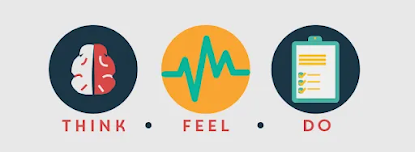
Our lives are very much controlled by our thoughts, emotions and actions (or behaviours). It isn’t obvious, but these three elements are integral to who we are. What’s less obvious is how these elements interact. What we think affects how we feel, how we feel affects what we do. There are conflicting thoughts on which of these come first, I guess it depends on which we notice first. To me, what’s more important is, how aware we are of our thoughts, emotions and actions. I believe our behaviours or actions and decisions are the outward “expressions” of our thoughts and feelings. It is the most obvious of the three elements, it is what others see and experience. What’s less obvious are our thoughts and emotions. In coaching, this knowledge should help us coaches to guide coachees in exploring and bringing to awareness the thoughts and feelings that are driving them. As coaches, we need to look beyond the surface and dig deeper. We’re often unaware of the impact our thoughts, emotions and...

Strength Based Coaching

Image
In my limited coaching experience, when coachees are asked what they would like to talk about or focus on, it is usually on an area of “weakness”. This comes as no surprise as research has shown that across a wide array of psychological events, people tend to focus more on the negative as they try to make sense of the world. We have a tendency to 1. Pay more attention to negative events, rather than positive ones 2. Learn more from negative outcomes and experiences, and 3. Make decisions based on negative information rather than positive data To me, this makes strength-based coaching that much more important. To me, strength-based coaching is really about drawing the coachee's attention towards their strength, not to distract them from their challenges but to help them amplify their strength, to leverage it to help them overcome challenges or even to maximise their potential. It’s helping coachees realise that they have it within them to overcome their challenges.  This is ke...

Neurological Levels

Image
  It took me quite some time to properly process the lesson and it dawned on me to try and find something familiar or a metaphor, something I can easily relate to, to help summarise my learnings for the webtorial. To help me understand the lesson better in this particular instance, I realised applying this framework in coaching is like trying to “debug” a faulty software code. Software codes are basically a collection of “instructions” and algorithms that are put together to perform a certain task. Without going into much technical detail, software codes are structured into parts or levels, each part/level is designed to perform a certain function. Some parts/levels need to work with other parts to complete a function, while others may work independently. Collectively, they come together to make the software whole. Like most software (or applications), there is a “user interface” that we interact with, the part that we see, touch and feel, and then there’s the part we don’t see, th...

Filters and Styles

Image
We each perceive reality differently. Our backgrounds, culture, upbringing and experiences, shapes the lenses we look through, and ultimately affects the way we “interpret” the world around us. I believe there is no “right” or “wrong” lenses, it’s just different and these different lenses are what makes each of us unique in our own way. Reflecting on this and its relevance to coaching, I’m reminded that I need to be aware of the lenses I’m looking through and how it “colours” the person I’m coaching and how it might “filter” what I hear. On the same note, the coachee themselves have their own lenses and filters through which they experience the world and while I can’t change their lenses and filter, I should do my best to empathise. I’m therefore, mindful that I have to make a conscious effort to not allow my “lenses” and “filters” affect my perception of the coachee, lest I appear judgemental and unempathetic.  This had me reflecting on what I can do to try and overcome these pote...

G.E.A.R.E.D for Progress

Image
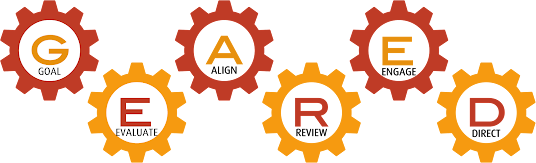
So we’re tasked with coming up with our very own coaching model. And to be honest, I started thinking about this one even before the webtorial and I had a couple of ideas but in the end, I threw it all away and started again from scratch. At the end of the webtorial, I asked myself, “what would my coaching model look like? How will it represent me and my style of coaching? What is my style of coaching?!” There were many questions, but little answers. As I reflected on those questions, it helped me shape my first coaching model, or at least the first one I didn’t throw out. In the past months, I’ve begun to see what coaching is, why we coach and to me, it’s about helping others make progress. And progress really is about moving forward. So with that, I came up with the “G.E.A.R.E.D. for Progress” model. 1. Goal – What is the desired outcome or what result do I want to see? This is the first step, articulating the goal and putting it in writing. Writing it helps us make our goal clear,...

Explore Coaching Models

Image
Coaching models… what are they and why do we need them? Coaching models are essentially a framework of sorts to provide a structured approach to the coaching process. A coaching model can help a coach prepare and plan for a coaching session, help guide the coaching conversation and help a coach stay focused.  I realised there are many models out there and there isn’t a “one size fits all” model. But, while looking at some of the models, I found some similarities. They each have some form of the following components; - Establish a goal - Explore options - Enact a plan While coaching models are designed to provide a framework, a structured approach to coaching, I believe as coaches, we should allow a model to constrain us. Coaching isn’t a “linear” process, coaches need to be flexible and flow with the coachee… not the coaching model.  The model is like a vehicle we use to get our passenger (the coachee) to their destination. As the driver, we need to pay attention to wher...

Purpose

Image
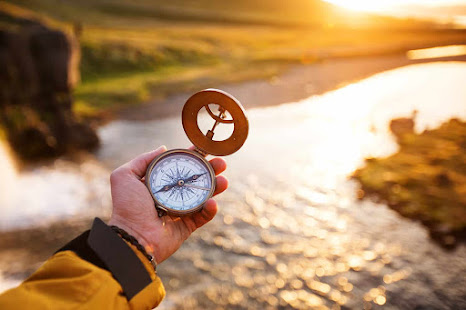
Purpose is a journey, not a destination. It’s not something we work towards, not something we achieve, but it’s the reason we do what we do… it’s like our compass, our north star. So why is knowing our purpose important?  I believe that knowing our “purpose” helps guide our decision-making, it can help us stay focused on what’s important (to us), it give us clarity on our goal, helps us prioritise our resources, and align our thoughts and actions towards our goal. Purpose… it’s powerful. After graduation, I focused on getting a job. When I got a job, I focused on doing well at work, so I could get a fat bonus which allowed me to go on a spending spree and enjoy myself. After all, I worked hard for it, I deserve it! Nothing wrong with that… the question of purpose didn’t really hit me, till I realised that life’s got to be more than just work, paying bills and eventually meeting my maker. Life’s got to be worth more than that… there has to be more meaning to life! I believe the ques...

Focus and Priorities

Image
Life can feel like it is an endless cycle of distractions and tasks. There are so many things that compete for our attention. And because of this, our ability to sustain focus and attention can be reduced, making it difficult to fully engage with experiences and appreciate their meaning and significance. According to a Harvard study in 2010, the average person’s mind wanders 47% of the time. This basically means our minds are half the time wandering while we’re working on something! When I think about how this compares to me, I think I’m not very different. I’m often distracted and by the time I’m done dealing with the distraction, I forget what I was doing or even why I was doing what I was doing. Worst still, sometimes the distraction completely takes over and the work I had started doing, doesn’t get done!  This got me thinking about what I can do to stay focused. How do I stay focused on a task or a goal? And when it comes to coaching, how can I stay focused on the coachee and ...

The Inner Game

Image
  The formula of “Performance = Potential – Interference” got me thinking of a recent incident. Not too long ago, I received a call from my mom, she was experiencing car problems and was stopped by the side of the road. Sounding distressed she told me that her car engine was vibrating violently and had stopped running. I rushed over to her location and arranged for her car to be towed to the nearest workshop. While waiting for the tow truck, I started walking through with her the sequence of events prior to her car stalling to try and identify potential causes of the engine stalling. She told me she had just filled her car with “petrol”. I thought it was rather odd that her car would stall after a refuel and requested to see the receipt… and that’s when I realised she had accidently pumped diesel instead of petrol. As I reflected on this incident, I immediately drew parallels to the lesson in this webtorial. Just like the vehicles we drive, we have the potential to deliver optimal ...

Going with the FLOW

Image
In my mind, I picture a river… flowing… different sections of the river have different characteristics which shape the flow of the river. Some parts are narrow, some parts are wide, some parts are turbulent, some parts are calm, some parts are winding and some parts are straighter. Every part is different, yet the sum of it gives the river its unique character. Life is kind of the same. We each go through life differently and for us to effectively know another, and for us to “flow” with them, we need to take the time to “discover” their unique characteristics.  To be in “flow” (according to Mihaly Csikszentmihalyi) means to be in the zone, to be so engrossed in an activity that everything around them doesn’t seem to matter. And to me, to “flow” in coaching means to be IN flow with the coachee, not to be part of their flow but to join them in flowing so we can better appreciate their essence and empathise with them. It is a process that shouldn’t be rushed but at the same time, as c...

Mind the G.A.P.

Image
Most of us have dreams we would like to realise, goals we would like to achieve or targets we’re aiming for. And hence, a “gap” exists and this gap (or gaps) is essentially the divide that separates us from our goal, the break that stands in the way of us achieving our target. I’ve often wondered how to bridge my gaps (and I must admit, I have a few) and in webtorial 13, I learned that there are some areas I may want to consider exploring.   1. Values – The gap between what we value (or what we profess to value) and where we spend our time. Do I know what my values are? Are my values aligned with my priorities and my behaviours?  2. Beliefs – The gap between the beliefs (and behaviours) that meet our needs and those that don’t. Are my beliefs holding me back from doing what I need to do? What are some beliefs I should challenge? 3. Time – The gap between what we plan to do and what we actually do. Am I making the time to do what I need? Am I putting my plans into action?...

Questions... Questions... Questions

Image
Asking good questions is a key skill in coaching. I learnt in webtorial 12 that questions have the power to trigger a mental reflex known as “instinctive elaboration”. An “instinctive elaboration” is when the brain, for a brief moment focuses its resources solely on answering the question asked. This got me curious and I decided to look into “instinctive elaboration” a little further to see how I could leverage this mental reflex in a coaching conversation.  I discovered that while questions can cause the coachee to experience “instinctive elaboration”, something they have no control over, their response is absolutely under their control. The quality of the questions we ask as a coach could either lead the coachee to think deeper and initiate profound shifts in thinking OR it could cause further confusion and maybe even anxiety for the coachee. Good or even power questions allow us to harness the power of the coachee’s brain to spark deep thinking, creating opportunities for perspe...

Facilitating Growth

Image
  A coaching relationship is a collaborative relationship between coach and coachee. A relationship where the coach holds up a mirror to the coachee, supporting the coachee in exploring and examining various aspects of the coachee’s life, discovering new insights and awareness, to challenge assumptions and beliefs, to expand perspectives. With that comes new discovery, learning and insight. Facilitates Client Growth is about the next steps. Partnering with the coachee to consider all that has they have learned, insights they have gained, and to integrate it into their lives. I would summarise my understanding of this particular competency as follows: 1. Ponder – Invite the coachee to reflect on all that has been discussed. Consider new insights, perspectives and even discoveries they have made throughout.  2. Picture – Help the coachee visualise their end goal, imagine what and how things would be like when they have achieved their goal. If the coachee could visualise the ...

Awareness

Image
Of the eight ICF Coaching Core Competency Model, I must admit this core competency of “Evokes Awareness” is toughest for me. Being self-aware is a challenge in itself, what more to Evoke Awareness in someone. I must admit, it is no easy feat, but nonetheless essential in helping the coachee move forward.  To help me understand a lesson or learning, I often try to relate it to something familiar, draw parallels to ease my own understanding. As I thought of this core competency and reflected on what was shared during the webtorial… I thought, Evoking Awareness is like inviting the coachee on a journey of exploration. The areas of exploration includes the following: 1. Their view of themselves – How they see themselves where they are, how they could be feeling. What are their values and beliefs, and how does it influence their thoughts, actions and decisions. 2. Their view of the situation or circumstance – How do they see things, what’s their point of view and why. 3. New possi...

Listening...

Image
  Listening. Sounds easy… but it really isn’t. Reflecting on the core competency of “Listens Actively”, it dawned on me how little we (by we I’m really just referring to myself) pay attention to the different nuances in somebody’s communication. There’s so much involved and so much to “listen” to in a conversation but when we do pay attention, it helps us, the coach better support our client. I’m going to summarise my reflections on the Listens Actively Core Competency in the following 3 points: 1. Filters – Everyone communicates through “filters”. We’re all different in our upbringing, cultural background, we have different values and beliefs, all these shapes our perspectives. All these show up in the way we speak and the way we listen. Being aware of these filters helps us be better listeners. As a coach we need to be aware of how the coachee’s filters are shaping what is being said and likewise, how our own filters could be “distorting” what a coachee is saying. Paying attent...

Presence

Image
It’s been said that the best gift you can give someone, is your presence. But what is “presence” and how does one “maintain” presence? How does one practice “maintaining presence”? ICF defines the competency as being “fully conscious and present with the client, employing a style that is open, flexible, grounded and confident”. While it sounds simple on the surface, I believe there is so much more that meets the eye.  To be present in any situation and for us to be “fully conscious and present with the client” requires us to basically be: 1. mindful 2. focused and engaged in the here and now 3. in a state of calm 4. in a receptive state of mind 5. paying attention to what’s going on 6. without distractions, without wanting to be somewhere else, without being lost in thought Being present, I must admit, is quite a challenge for me, let alone maintain it! And it’s a challenge because I’m easily distracted and surrounded by distractions! However, I believe it is possible a...